

These newsletters are supposed to stoke your curiosity and guide you to some content at TrailOption. And that, I hope, is supposed to lead you, dear subscriber, to a sense of wonder about our surroundings, to insight into how the science of geoarchaeology works, and to share in my curiosity and wonder about the natural world. Or maybe it’s just kind of cool – it does not have to scream. At least I think that is what TrailOption is all about. Of course, that requires content from me.
“Curiosity and Wonder” inspiration from Richard Bernabe’s Beyond the Lens podcast with Anand Varma.
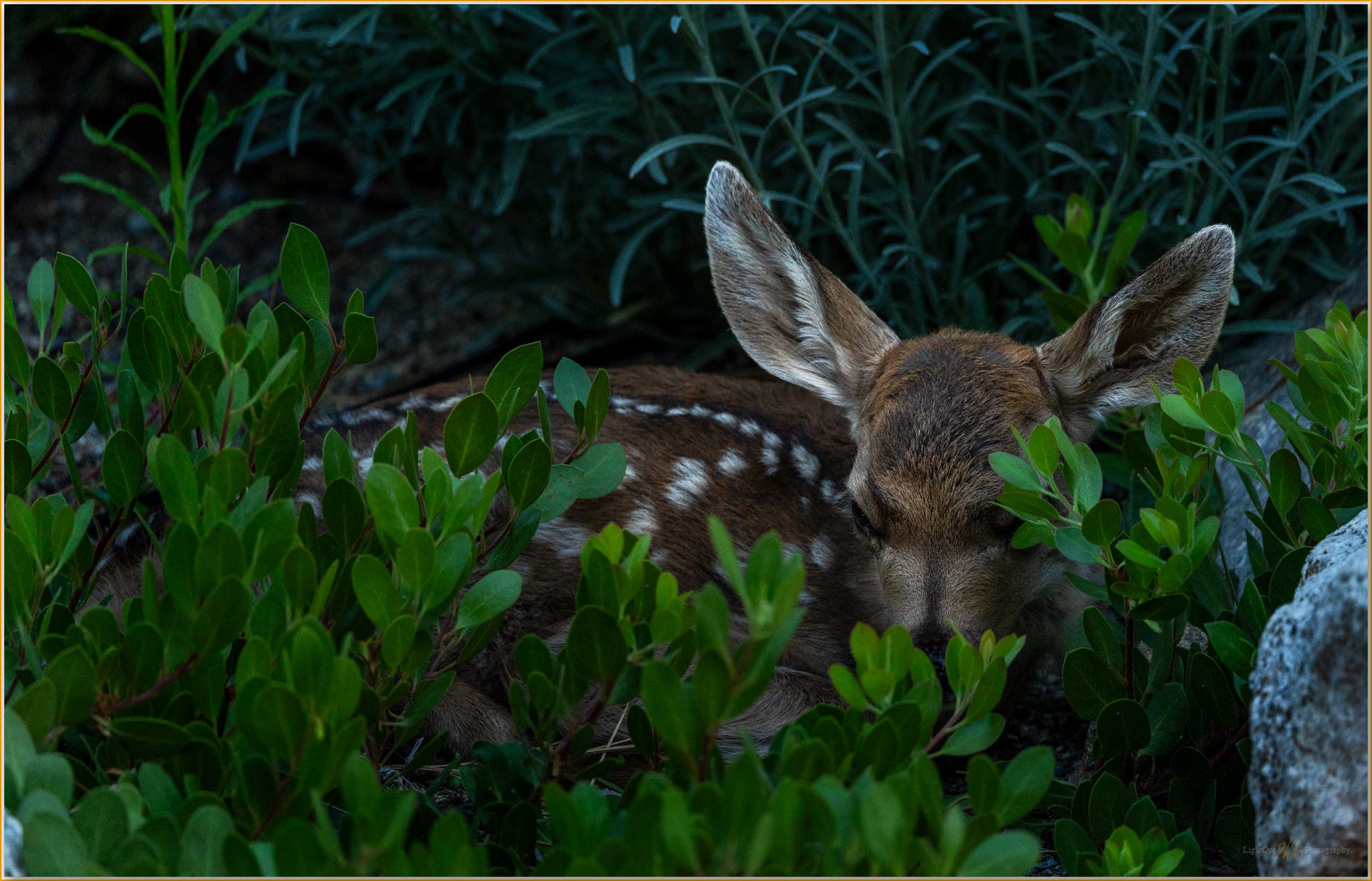
Stillness. A fawn rests in the quiet of our home’s small woodland, Vicee Canyon, NV, USA.
I have been thinking about the overwhelming influence of algorithmic media. The inorganically arranged and addictive input that fills many of us with angst, fear, and slightly dirty regret. Of course, I consume and use social media daily. I enjoy seeing what true friends and mentors are doing, I look for long-form content by people and about people doing things I am interested in – science, photography, weather, or music, and I convince myself that my curation technique keeps my feeds clean. (How’s that going? Meh).
I enjoy creating and have a desire to continue to improve as a presenter/educator. It is a personal priority, because science and geography education is now a mere whisper in the dulling drone of algorithmic shouting. Even when the calendar defeats me and the stories get stuck, I am still out there experiencing and mapping things I cannot wait to tell you about. My common angst arises, however, as I consider how to communicate my curiosity and wonder, and how do I keep that content mine? It is very rare that I consider whether anyone is interested and logging in; I will do it anyway.
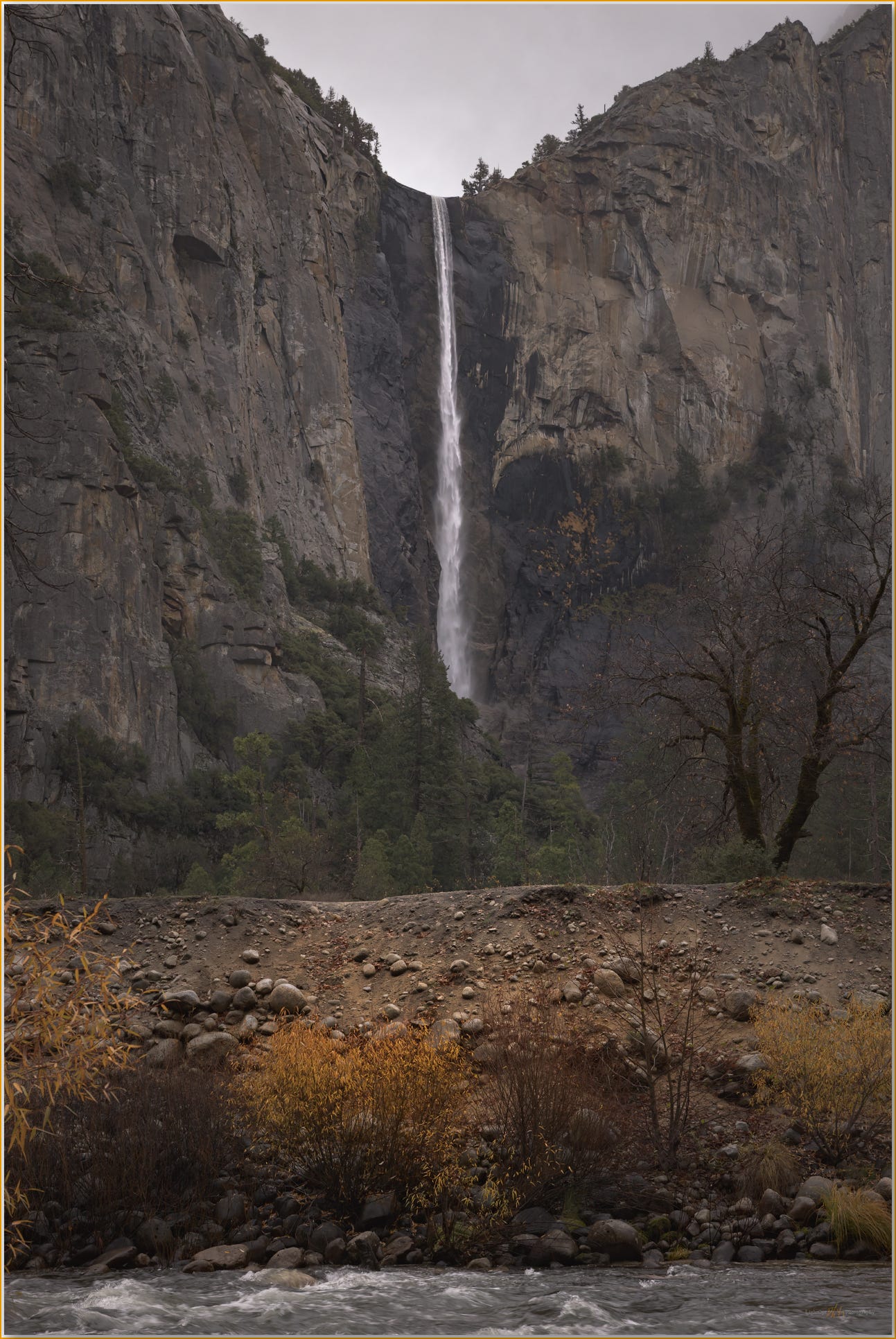
Terrace below the falls. Glacial outwash terrace along the Merced River in Yosemite Valley, CA, USA.
So, here is my TrailOption content approach, as a personal, goal-oriented outline and an explainer, so you can follow along. I have a surprisingly nice following across social media, in the very low hundreds here or there, but it is TrailOption subscribers (via Substack) who matter. You took the time to subscribe, so you are already interested (or nice) (or both). This is for you (but tell your friends).
TrailOption is the home for everything.
Long-form content (i.e., stories, photo essays, and videos) will be emphasized.
The “Fieldnotes” blog will hold shorts, reels, and photo posts from any social channels I might use.
Except for an occasional story, those little bits that go away anyway (e.g., “Hey, I’m in Butte Valley to walk an arroyo in the Cherry Creek floodplain and look at all the pinyon jays!”), anything ‘social’ will be on the website.
This is where I need to work better.
Substack is the intermediary.
My subscriber list is maintained here
Excerpts and hints will point to TrailOption
Subscribers will get notice of long-form content (i.e., posts and videos) before anyone else – at least 48 hours before I publish elsewhere.
Socials
Communication and advertising
Ok, just advertising. I want people to be curious about what I am doing and join us at TrailOption
I will do my best to respond to all questions or comments
It’s the whisper
Keep going
Recently at TrailOption
I have been crunching on a few post ideas and have first drafts on a couple new pieces. I fear these are not as timely as I like, but they need to get out there nonetheless.
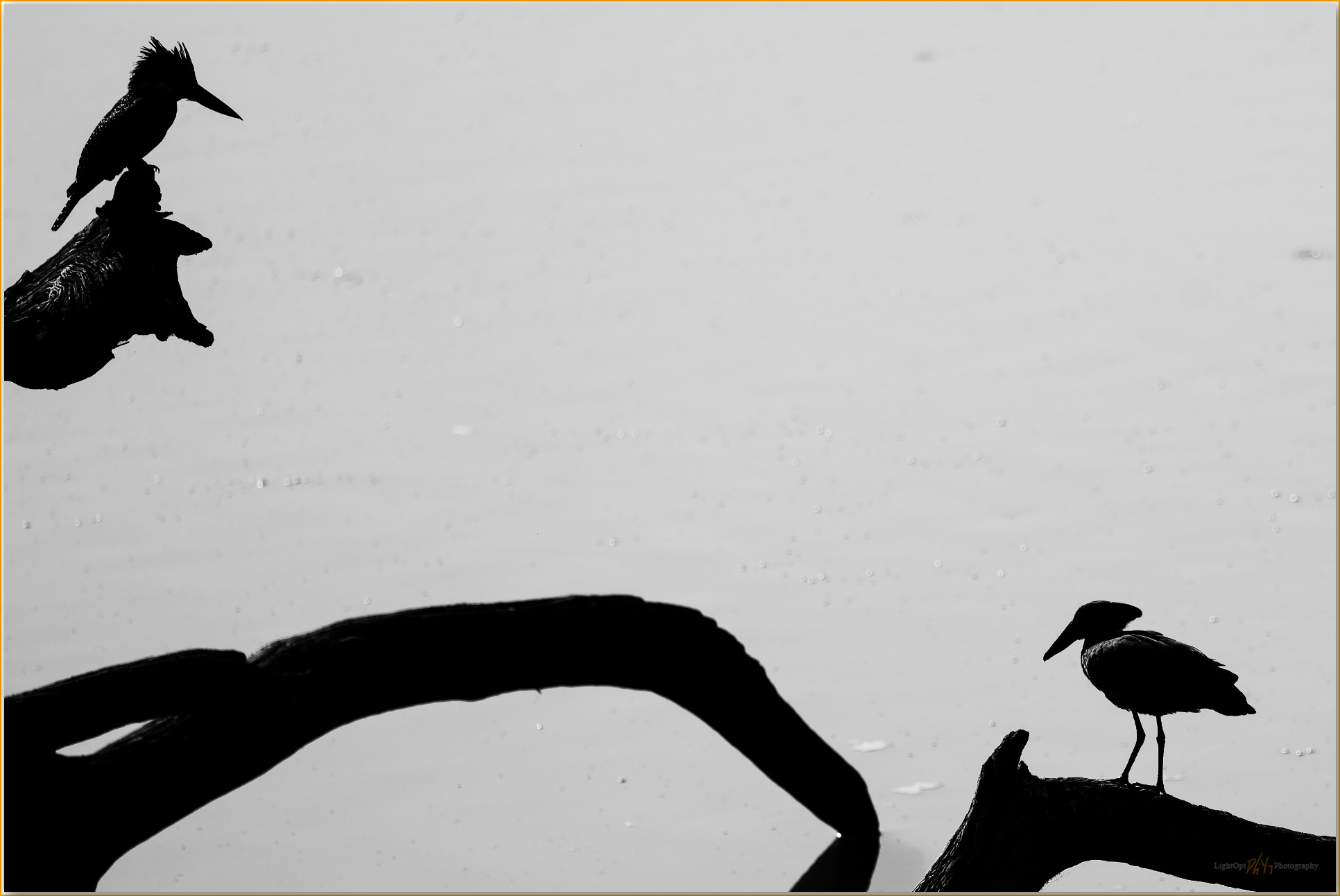
King and Kop. A Giant Kingfisher and Hamerkop share a moment on a wetland in Luangwa National Park, Zambia, Africa.
My wildlife photo galleries from Zambia are nearing completion. I am looking forward to sharing those. There are so many ‘keeper’ images from the 2025 Zambia expedition that I hope to release them slowly, incorporating as much story as possible. Also, I have practically an entire year of research and exploration excursions that would be a pleasure to share. We will see, clearly, if I can break the confines of the calendar; there may be some triage along the way.
Research Recces
My work and research focus for the past couple months has been in the Mojave Desert. I am striving to create a small-scale (i.e., large area) map of landforms that formed recently enough to bury and preserve archaeological sites. This is critical in those areas where recent landform changes bury archaeological evidence completely, and they cannot be found through typical archaeological survey methods. Government agencies have come to rely on similar maps and models as one part of the suite of things helpful for managing public resources of all kinds – in this case it is the iconic Joshua Trees. It’s almost overwhelming, and I am deep, sometimes literally, in the alluvial fans, springs, lakebeds, and dunes of the Mojave, those dynamic landforms in that desert landscape. It is fascinating, and I hope it works. I have made several ground-truthing forays in the past few weeks.
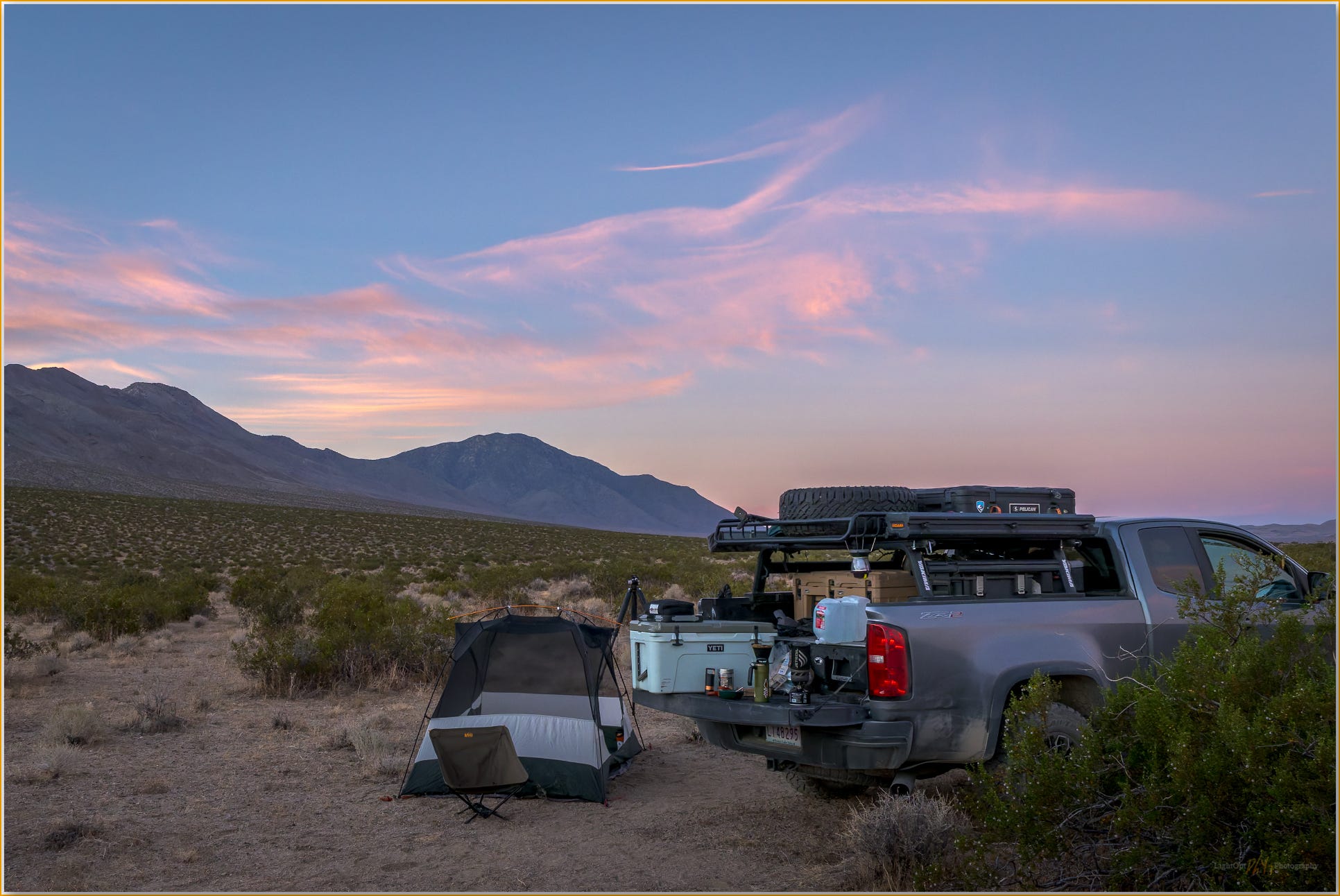
Darwin camp. Sunrise above Darwin Wash, Argus Range, CA, USA.
I spent some time back on the Wishbone Lobe of the Old River Bed Delta in the West Desert of Utah. The Air Force allowed us access for a long weekend, so we continued our inventory and study of delta environments, including where people and large fauna may have left trackways and other features. We spent a couple days using Ground Penetrating Radar to calibrate our understanding of the stratigraphy we can’t see easily, and to search for evidence of disturbances (such as a person or animal walking across the delta) that alter the ‘natural’ contacts of the delta stratigraphy. Can we locate more trackways? Can we document and preserve these compelling features? And learn from the associated archaeological and environmental records? More to come.
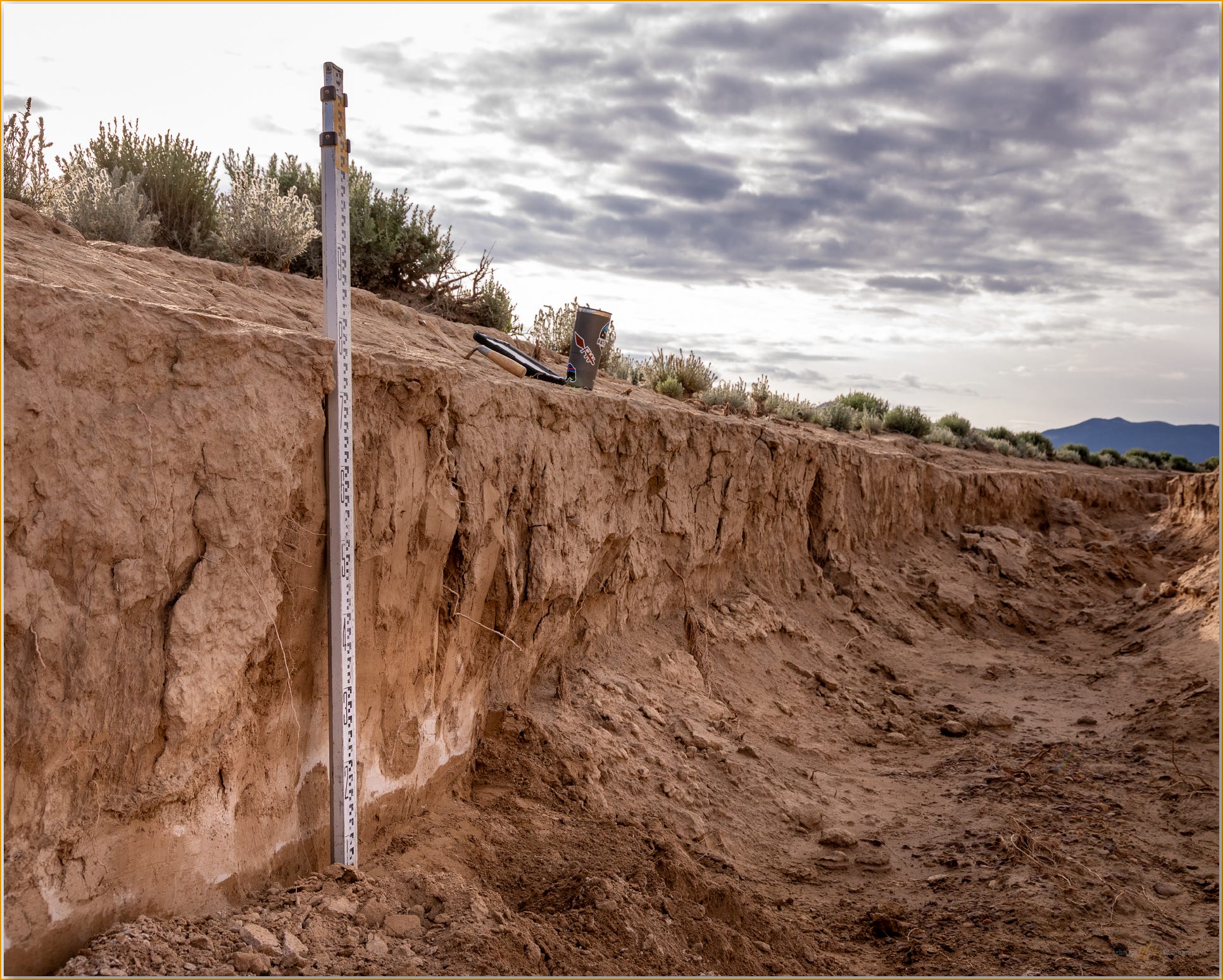
Mazama at Wallace Creek. White volcanic ash, deposited 7,700 years ago, marks a now-buried surface in loessic alluvium of the Wallace Creek fan, Monitor Valley, NV, USA.
I have an article coming out in the journal Geoarchaeology. I collaborated with my good friends and colleagues Bob Elston (lead author) and Jack Oviatt, looking at the coatings that silica leaves on stone tools of specific material types. Besides the opportunity to learn from my friends, I had the task of mapping the interplay between site location, silica coatings, and landforms with volcanic tephra (i.e., Mazama Ash). It’s important. I will post a copy of the paper when I get a version in my hands.
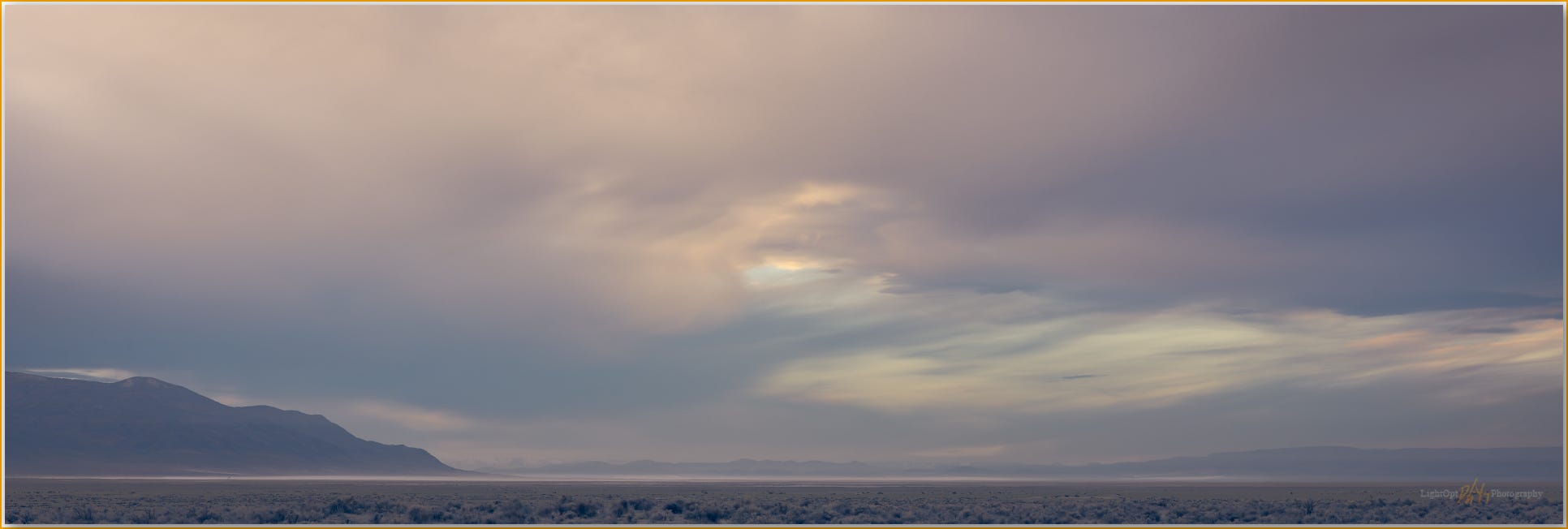
Smoke before dawn. A muted morning on the Smoke Creek Desert, NV, USA.
See you out there
In the next few weeks, I am focused on writing the methods and results behind the recent Mojave landforms and Joshua Trees. I have a trip to Grand Junctions to visit my parents and then I will likely spend some time in the woodlands of northern California. The woodland projects are brief forays relatively, but I always find it fascinating and challenging to work in environments so unfamiliar.
Keep going.